

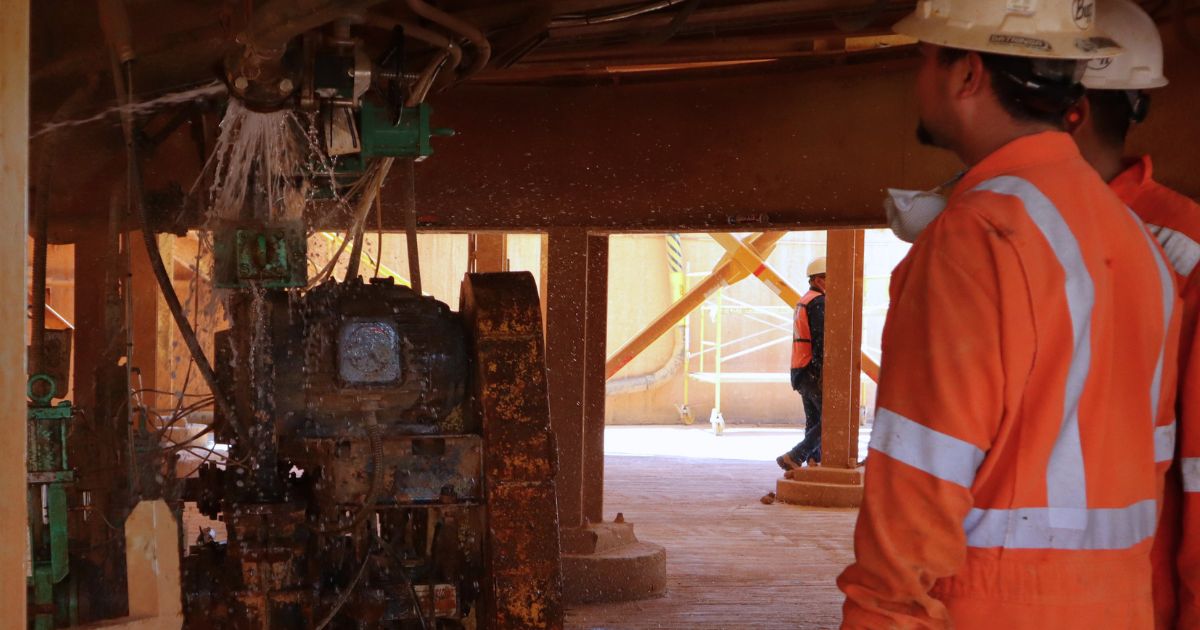
A pump that fails without warning rarely fails without signs. In most cases, there was abnormal vibration weeks earlier, a leak that was tolerated for too long, or a bearing already running above its normal temperature range. What was missing was not a technician — it was an inspection program that turned those signs into action before the shutdown. This article delivers exactly that: a preventive maintenance checklist for industrial pumps organized by frequency, the variables worth measuring, the errors that accelerate wear the most, and the criteria for deciding when the problem is no longer about maintenance but about the system.
What a Preventive Maintenance Plan for Industrial Pumps Must Achieve
A preventive maintenance plan is not a list of periodic tasks. It is a system for detecting deviations before they cause downtime, cost, or safety risk.
In practice, an effective plan serves three functions:
- Routine inspection — quick observations (visual, auditory, instrumental) that confirm the pump is operating within normal parameters. Performed without shutting down the equipment.
- Scheduled preventive maintenance — planned interventions requiring a shutdown: lubricant change, packing adjustment, alignment verification, component replacement based on operating hours or condition.
- Predictive escalation — when vibration, temperature, or power consumption data show an abnormal trend, a detailed vibration analysis, laser alignment, or hydraulic system review is scheduled.

💡Tip: A good plan does not try to cover everything at the same frequency. Assign intervals based on equipment criticality, service severity, and operating hours — not with a generic calendar applied equally to every pump.
What to Check During Each Inspection: Critical Components and Variables
Each inspection should cover the main pump components and the operating variables that indicate its actual condition.
Key Components
- Mechanical seals: Check for visible leakage. Seal faces require alignment within micron-level tolerances; slight variations become destructive at 1,800 or 3,600 rpm (U.S. DOE, Improving Pumping System Performance).
- Packing: Confirm that leakage is within the acceptable range of 2 to 60 drops per minute. Leakage below that range can cause overheating; leakage above it indicates the need for adjustment or replacement (U.S. DOE, Maintain Pumping Systems Effectively). Note: some manufacturers recommend different ranges depending on the application; consult the OEM manual.
- Bearings: Measure temperature and listen for abnormal noise. A bearing that consistently operates above the manufacturer's baseline temperature is in progressive deterioration.
- Lubrication: Confirm lubricant level, color, and consistency. Look for contamination with water, metallic particles, or foam.
- Pump-motor alignment: Verify that nothing has changed since the last measurement. Misalignment is a common cause of premature failure in seals, bearings, and couplings.
- Impeller and wear rings: Check internal clearances during each overhaul. Increased clearance reduces efficiency and increases internal recirculation.
Operating Variables to Record
| Variable | Instrument | Minimum frequency |
|---|---|---|
| Discharge pressure and suction pressure | Calibrated gauge / transmitter | Daily |
| Flow rate | Flow meter | Weekly |
| Vibration (velocity, displacement, or acceleration) | Portable analyzer | Weekly–monthly |
| Bearing and pump casing temperature | Sensor, RTD, or infrared gun | Daily |
| Motor power consumption | Clamp meter / MCC reading | Weekly |
⚠️Warning: A gradual drop in discharge pressure with no change at the control valve may be caused by internal wear (wear rings, impeller), but also by cavitation, motor speed loss, air ingress, or suction-line obstruction. Before addressing the motor, check clearances and suction conditions.
Recommended Frequency: Daily, Weekly, Monthly, and Annual Tasks
The following table establishes a baseline frequency. Adjust it based on equipment criticality, service severity (abrasion, corrosion, temperature), and accumulated operating hours.
| Frequency | Task | Component / Variable |
|---|---|---|
| Daily | Visual inspection for leaks, noise, and perceptible vibration | Seals, packing, pump casing |
| Daily | Discharge and suction pressure reading | Gauges / transmitters |
| Daily | Bearing temperature check | Sensor or infrared gun |
| Weekly | Lubricant level and condition check | Bearings |
| Weekly | Motor power consumption recording | Motor |
| Monthly | Vibration measurement with portable instrument | Bearings, pump casing |
| Monthly | Packing leakage check (drop-rate range) | Packing |
| Quarterly | Pump-motor alignment check | Coupling |
| Quarterly | Anchor bolt and foundation check | Pump baseplate |
| Annual | Internal inspection: impeller, wear rings, mechanical seal | Pump internals |
| Annual | Full laser alignment | Pump-motor |
| Annual | Motor electrical check (insulation, resistance) | Motor |
Practical Checklist by Frequency
Daily inspection (no shutdown):
- No visible leaks at seals, packing, or connections
- No abnormal noise (knocking, cavitation, rubbing)
- Discharge pressure within expected range
- Bearing temperature stable
- No perceptible vibration beyond normal levels
Weekly inspection:
- Lubricant level verified
- Power consumption recorded and compared against baseline
- Packing leakage within the 2–60 drops/min range
Monthly inspection:
- Portable-instrument vibration measurement recorded
- Temperature and vibration trend reviewed against historical data
Quarterly / annual inspection:
- Pump-motor alignment verified (laser for annual)
- Wear rings inspected (clearance measured)
- Mechanical seal evaluated and serviced if applicable
- Maintenance history updated
Warning Signs That Require Intervention Before Failure
Do not wait for the next scheduled cycle when any of these signs appear:
| Symptom | Possible causes | Immediate action |
|---|---|---|
| Increasing mechanical seal leakage | The seal has lost face tolerances; degradation progresses rapidly at 1,800 or 3,600 rpm. | Schedule a seal replacement. |
| Vibration significantly exceeding baseline (e.g., double the normal value) | Imbalance, misalignment, bearing wear, or damaged impeller. | Perform an immediate diagnosis and escalate to vibration analysis if the trend is sustained. Note: The "2×" threshold is a rule of thumb; follow your plant's or manufacturer's alarm criteria. |
| Sustained rise in bearing temperature | Lubrication loss, lubricant contamination, or excessive load. | Check lubrication, load, and bearing condition before it reaches failure. |
| Drop in flow rate or pressure with no system change | Wear ring wear, eroded impeller, or internal recirculation. | Check internal clearances, hydraulic wear, and impeller condition. |
| Cavitation noise (crackling or knocking at the suction) | Available NPSH is close to or below the required value. | Verify suction-line conditions before continuing extended operation. |
| Abnormal power consumption | Internal friction, misalignment, overload, or partial dry running. | Compare against baseline and determine whether the deviation originates from the equipment or the system. |
🔴Caution: A pump with sustained cavitation does not just lose flow rate — it erodes the impeller irreversibly. If the noise persists after checking the suction line, shut down the equipment and verify available NPSH before continuing operation.
Common Errors That Trigger Wear, Leaks, and Unplanned Shutdowns
Many "pump failures" are actually failures induced by operation or maintenance. The most frequent errors:
- Bearing over-lubrication. Excess grease generates heat, not protection. Follow the manufacturer's quantity and frequency recommendations.
- "Eyeball" alignment without instruments. Angular or parallel misalignment that looks minor destroys seals and bearings within weeks. Use a dial indicator or laser.
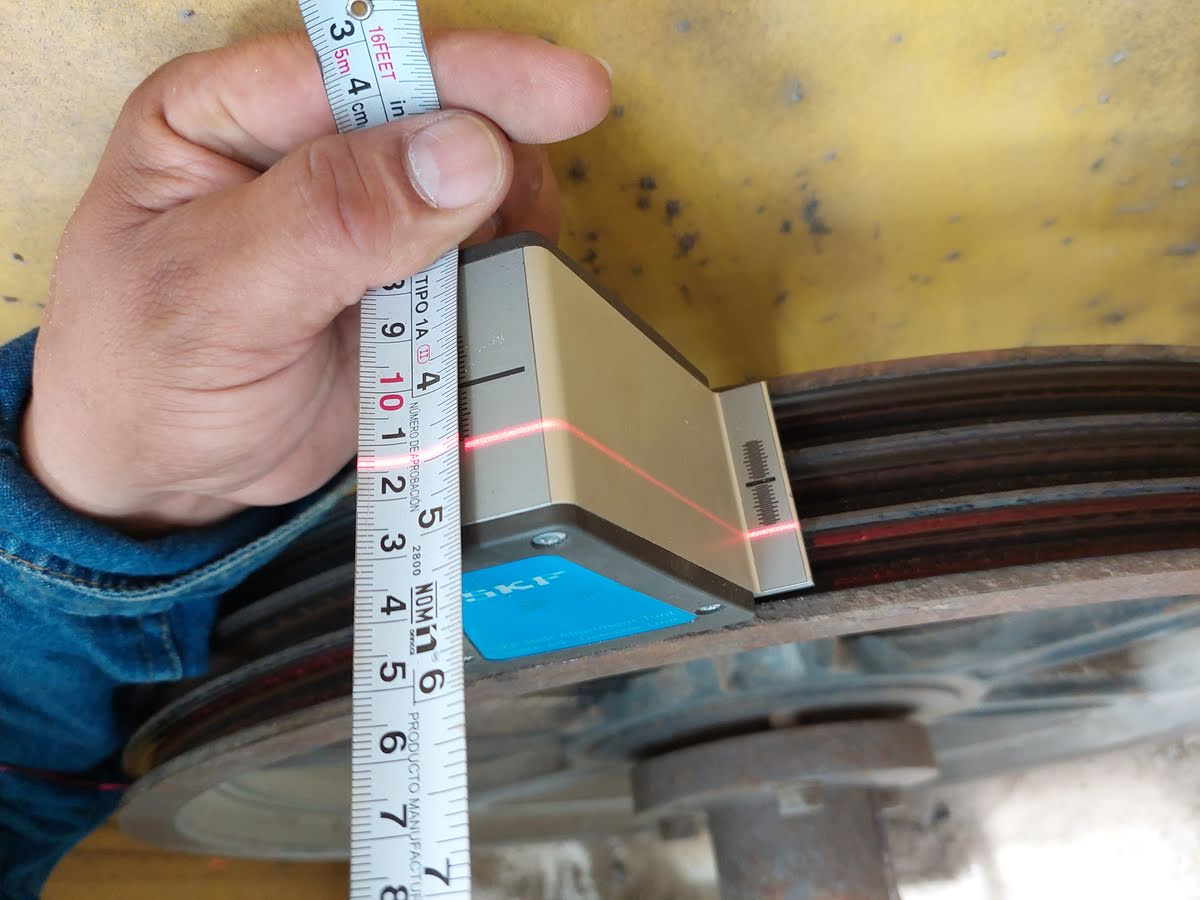
- Operating far from BEP. If flow rate varies by more than 30% from the best efficiency point (BEP) flow, the pump experiences radial and axial loads that accelerate shaft, seal, and bearing failure (U.S. DOE, Improving Pumping System Performance). Prioritize that pump for further analysis.
- Ignoring small leaks. A packing leak outside the acceptable range or a seal leak that "has always been there" is active deterioration.
- Poor documentation. Without a history, every intervention starts from scratch. You cannot identify trends or justify budget.
- Low-quality spare parts. A generic mechanical seal without the correct tolerances lasts a fraction of the original's life. The initial savings are lost on the second replacement.
✓Decision point: If your plant has pumps that repeatedly fail on the same components (seals, bearings), before replacing the part yet again, verify alignment, operation near BEP, and suction conditions. The root cause is usually outside the pump.
How to Document Findings and Manage Critical Spare Parts
Records That Add Value
A useful record is not a narrative log. For each intervention, document:
- Date and accumulated operating hours
- Component serviced and action taken
- Relevant measurements (vibration, temperature, wear ring clearance, lubricant condition)
- Unexpected finding, if any
- Recommended next action
With that data you can identify patterns: if a seal consistently lasts less than 6 months on a specific pump, the problem is not the seal.
Minimum Critical Spare Parts Stock
For critical pumps (those whose shutdown halts production), keep in stock:
- Complete mechanical seal kit
- Bearing set
- Wear ring set
- Custom-cut packing
- O-ring and gasket set
For pumps with redundancy, stock can be shared between units of the same model. The operating rule: the time to obtain the spare part must not exceed the tolerable downtime.
If you need to diagnose repetitive failures, review your current maintenance plan, or quote critical spare parts for your pumps, contact our technical team. We can help you determine whether the problem lies with the component, the system, or the operation.
When the Problem Is No Longer Maintenance but a System Mismatch
A recurring failure does not always indicate poor maintenance. Sometimes it means the pump is operating in a system that does not match its design.
Signs of a System Mismatch
- The pump consistently operates far from BEP (more than 30% above or below the best efficiency point flow).
- The most frequent failure is always the same component, despite using quality spare parts and following correct procedures.
- There is cavitation noise even with the suction line clear and unrestricted.
- Actual discharge pressure differs significantly from the manufacturer's curve.
System Mismatch Formula
To evaluate whether a mismatch exists between what the system requires and what the pump delivers, use this formula:
$$\text{Imbalance (\%)} = \left[\frac{Q_{\text{meas}} \times H_{\text{meas}}}{Q_{\text{req}} \times H_{\text{req}}} - 1\right] \times 100$$
Where:
- \( Q_{\text{meas}} \) = measured flow rate in operation
- \( H_{\text{meas}} \) = measured head in operation
- \( Q_{\text{req}} \) = flow rate required by the process
- \( H_{\text{req}} \) = head required by the process
If the result exceeds 20%, a detailed system review — not just the pump — is warranted (U.S. DOE, Improving Pumping System Performance).
iNote: NPSH3 is the required NPSH that causes a 3% drop in total head. It is the manufacturer's standard threshold, not a safety margin. If you operate with available NPSH close to NPSH3, the pump may cavitate intermittently — and the failure will look like a maintenance issue when it is actually a suction problem (Hydraulic Institute, Pump FAQs).
If you suspect the pump is correct but the system is not, or if you need to validate the actual operating point against the curve, request technical support. We can help you determine whether the problem is one of maintenance, selection, or hydraulic design.
FAQs
How Often Should I Inspect My Industrial Pumps?
It depends on criticality and service. At a minimum: daily visual inspection, monthly vibration measurement, and annual internal review. In severe services (abrasion, corrosion, high temperature), shorten the intervals.
What Variables Should I Measure for Early Problem Detection?
The most useful are vibration, bearing temperature, discharge pressure, flow rate, and power consumption. Measuring consistently and comparing against your own baseline is more valuable than any single absolute value.
When Should I Replace a Mechanical Seal?
When leakage is visible and increasing, when you detect face wear during an internal inspection, or when accumulated hours exceed the manufacturer's recommendation for that seal type and service.
How Do I Know If I Need a Professional Vibration Analysis?
When portable data show a sustained upward trend, when the pump repeatedly fails on bearings or seals, or when you suspect misalignment, imbalance, or resonance. Spectral analysis pinpoints the root cause with precision.
What Critical Spare Parts Should I Keep in Stock?
For critical pumps: mechanical seal kit, bearings, wear rings, packing, and O-rings. For pumps with redundancy, stock can be shared by model. The rule is that the time to obtain the spare part should not exceed the tolerable downtime.
How Do I Distinguish a Cavitation Problem from a Maintenance Problem?
Cavitation produces crackling at the suction, loss of flow rate, and impeller erosion. If the noise disappears when you open the suction valve or reduce the mounting height, the problem suggests an NPSH (suction) deficiency rather than a component failure. A full diagnosis may require vibration analysis or visual inspection.
References
- U.S. DOE — Maintain Pumping Systems Effectively — baseline maintenance checklist, packing leaks, bearings, alignment, and lubrication.
- U.S. DOE — Improving Pumping System Performance — failure causes, basic maintenance, system mismatch, off-BEP operation, and seals.
- Hydraulic Institute — Pump FAQs — NPSHA/NPSH3, operational checks, leaks, permissible operating conditions, and HI concepts.


